


Absolutely. Our services are delivered entirely online, so we work with learners regardless of location or time zone.

CIPD Level 5 Assignment Examples: What Strong Work Looks Like and How to Build It
If you are studying for the CIPD Level 5 Associate Diploma in People Management, you have probably searched online for CIPD Level 5 assignment examples. You are not alone. Many learners want to understand what a good assignment looks like, how to approach different assessment questions, and what assessors expect before beginning their own submissions.
CIPD Level 5 is an important step in developing professional knowledge and practical competence in people management. Unlike introductory qualifications, it requires learners to demonstrate critical thinking, apply HR theories to organisational situations, evaluate evidence and make justified recommendations.
But what does a strong CIPD Level 5 assignment actually look like?
This guide explores common assignment formats, the characteristics of effective academic work, illustrative examples and practical strategies for meeting assessment criteria. It also introduces the different CIPD Level 5 units and explains how learners can use sample assignments to improve their understanding and academic writing skills.
Looking for CIPD assignment examples? Visit the Pallas Brill CIPD Assignment Samples Library to explore examples covering different CIPD units and assessment topics.
1. What Are CIPD Level 5 Assessors Looking For?
CIPD Level 5 represents a progression from Level 3. Learners are expected to demonstrate a deeper understanding of people management concepts and their application in organisational environments.
A strong assignment should demonstrate the ability to:
· Apply knowledge: Connect HR theories, concepts and professional practices to real or realistic organisational situations.
· Analyse information: Examine issues in detail, identify relationships and consider different perspectives.
· Evaluate alternatives: Assess the advantages, disadvantages, strengths and limitations of different approaches before reaching a justified conclusion.
· Make recommendations: Propose practical solutions that address organisational challenges.
· Demonstrate professional judgement: Recognise ethical considerations, organisational priorities and the interests of different stakeholders.
· Use credible evidence: Support arguments with relevant academic literature, CIPD publications, research findings and applicable legislation.
· Reference accurately: Acknowledge sources using the referencing style required by your learning provider.
One important distinction is that a Level 5 assignment should not simply describe what an organisation does. It should explain why a particular approach is appropriate, examine its implications and consider whether alternative approaches might produce better results.
For example, when discussing employee engagement, simply defining employee engagement is insufficient if the assessment asks you to evaluate its importance to organisational performance.
You need to connect the concept to workplace practices, supporting evidence and organisational outcomes.
2. CIPD Level 5 Units: What You Need to Know
The CIPD Level 5 Associate Diploma in People Management covers several areas of professional people management. Understanding the units is essential because each has different learning outcomes and assessment requirements.
At Pallas Brill, we provide learning guidance, academic coaching and online tutoring across the following Level 5 units.
Core Units
1. 5CO01 – Organisational Performance and Culture in Practice
This unit explores organisational structures, business strategy, organisational culture, external business factors and the relationship between people practices and organisational performance.
Learners need to understand how people professionals contribute to organisational effectiveness and strategic objectives.
Example: https://pallasbrill.com/samples/5co01-cipd-assignment-help-samples-organisational-performance-and-culture-in-practice
2. 5CO02 – Evidence-Based Practice
This unit focuses on evidence-based decision-making in people practice. It explores research methods, data analysis, critical evaluation of information and the use of evidence to inform organisational decisions.
Learners should demonstrate an ability to distinguish reliable evidence from assumptions and use appropriate information to justify recommendations.
Example: https://pallasbrill.com/samples/5co02-evidence-based-practice
3. 5CO03 – Professional Behaviours and Valuing People
This unit examines professional behaviours, ethical practice, inclusive working environments, personal development and the importance of valuing people.
It requires learners to demonstrate professional judgement and understand how their behaviours influence relationships and organisational outcomes.
5CO03 CIPD Level 5 Example: https://pallasbrill.com/samples/cipd-assignment-help-for-5co03-organisational-performance-and-culture-in-practice
People Management Specialist Units
4. 5HR01 – Employment Relationship Management
This unit examines employment relationships, employee representation, conflict management, employment relations and approaches to maintaining positive workplace relationships.
5. 5HR02 – Talent Management and Workforce Planning
This unit focuses on attracting, developing and retaining talent, workforce planning, recruitment and selection, and the management of organisational talent requirements.
6. 5HR03 – Reward for Performance and Contribution
This unit explores reward management, employee motivation, financial and non-financial rewards, pay structures, benefits and the relationship between reward and organisational performance.
Special and Optional Units
Pallas Brill also provides learning guidance and academic support for the following specialist and optional areas:
7. 5OS01 – Specialist Employment Law
Understanding employment legislation and its practical application in people management.
8. 5OS02 – Advances in Digital Learning and Development
Exploring digital technologies, approaches and developments in learning and development.
9. 5OS03 – Learning and Development Essentials
Understanding the principles and practices of effective workplace learning and development.
10. 5OS04 – People Management in an International Context
Examining international people management, global workforce challenges and cross-cultural considerations.
11. 5OS05 – Equality, Diversity and Inclusion
Understanding equality, diversity and inclusion and their importance in creating fair and inclusive workplaces.
12. 5OS06 – Leadership and Management Development
Exploring leadership approaches, management capabilities and strategies for developing effective leaders.
13. 5OS07 – Wellbeing at Work
Examining workplace wellbeing, employee health, organisational responsibilities and approaches to supporting a healthy workforce.
Explore the available learning resources: Visit Pallas Brill's CIPD Samples Library.
Please note that the optional unit selected depends on the learner's qualification pathway and learning provider. Not every learner is required to complete all seven optional units.
3. Common Types of CIPD Level 5 Assignments
CIPD Level 5 assessments may take different formats depending on the unit, learning outcomes and assessment brief. The following are some common formats learners may encounter.
3.1 The Report
Reports are frequently used in people management assessments. You may be asked to evaluate an organisation's employee engagement strategy, examine recruitment practices or recommend improvements to performance management.
A strong report generally includes:
· A clear title page.
· A contents page where appropriate.
· An executive summary where required.
· An introduction explaining the purpose and scope.
· Well-organised sections addressing the assessment criteria.
· Critical analysis supported by evidence.
· Practical and justified recommendations.
· A conclusion summarising the main findings.
· Accurate references and a reference list.
Illustrative extract – Analysis section
Research on employee engagement highlights the important role played by line managers in shaping employees' workplace experiences. In Organisation X, exit interview data indicates that six of the ten most recent employees who left the organisation identified a lack of regular feedback as a contributing factor.
This finding suggests that weaknesses in communication and performance management may be affecting employee engagement. Herzberg's Two-Factor Theory provides a useful perspective because recognition is considered an important motivator. However, the available exit interview sample is relatively small, and it would be inappropriate to generalise the findings across the entire organisation without further investigation. An employee engagement survey and additional employee interviews could provide a more comprehensive understanding of the issue.
Notice the structure:
1. Introduce relevant research or theory.
2. Connect it to organisational evidence.
3. Explain its significance.
4. Consider limitations.
5. Identify what additional evidence might be needed.
This is the difference between simply describing a concept and demonstrating critical analysis.
3.2 The Reflective Account
Some CIPD assessments require learners to reflect on their professional practice, behaviours and development.
A weak reflection simply narrates an experience. A strong reflection examines what happened, why it happened, what was learned and how future practice will improve.
A useful structure is:
1. What happened? Briefly describe the situation.
2. Why was it important? Connect the experience to professional practice or an appropriate theory.
3. What did you learn? Identify strengths, weaknesses and areas for improvement.
4. What will you do differently? Establish practical development actions.
Illustrative extract
During a redundancy consultation, I realised that I had concentrated heavily on the procedural and legal requirements while paying insufficient attention to the emotional impact on affected employees. Reflecting on the experience using Kolb's Experiential Learning Cycle, I recognised that although my approach was procedurally sound, my communication could have demonstrated greater empathy.
In future consultations, I intend to allow more time for individual discussions, communicate information sensitively and seek feedback from colleagues on my approach. This will help me develop a more balanced approach to managing organisational change.
The important lesson is that reflection should demonstrate learning and professional development rather than simply recounting events.
3.3 The Case Study Analysis
Case study assessments require learners to examine a particular organisational situation and develop appropriate responses.
For example, a case study may involve:
· An organisation experiencing high employee turnover.
· A merger creating employee relations challenges.
· Difficulties attracting and retaining skilled employees.
· Poor organisational culture and employee engagement.
· A lack of effective leadership and management capabilities.
To produce a strong case study response:
· Identify the central organisational problems.
· Examine the causes and possible consequences.
· Apply relevant HR theories and frameworks.
· Consider legal, ethical and professional implications.
· Evaluate possible solutions.
· Recommend the most appropriate approach and justify your decision.
Frameworks such as PESTLE and SWOT can be useful, but they should only be included when they genuinely contribute to answering the assessment question.
3.4 Presentations and Briefing Papers
Some assessments require learners to communicate recommendations to senior managers or organisational stakeholders through presentations or briefing papers.
These formats require concise, relevant and evidence-based communication.
A strong presentation or briefing paper should:
· Clearly identify the issue being addressed.
· Present relevant research and organisational evidence.
· Explain the implications for the organisation.
· Provide realistic recommendations.
· Demonstrate how proposed actions support organisational objectives.
Avoid overcrowding presentations with unnecessary information. Focus on the key messages and the decisions that stakeholders need to make.
4. What Distinguishes a Strong CIPD Level 5 Assignment?
Understanding the difference between descriptive and analytical writing can significantly improve your assignment quality.
Consider the following example.
Descriptive writing:
Employee engagement is important because it improves motivation, productivity and employee retention. Organisations should therefore implement employee engagement strategies.
Analytical writing:
Employee engagement can contribute to improved organisational performance by strengthening employee commitment, motivation and discretionary effort. However, the effectiveness of engagement initiatives depends on how they are implemented. For example, introducing employee recognition programmes without addressing underlying issues such as excessive workloads or ineffective leadership may produce limited improvements. Organisations should therefore adopt a broader approach that addresses both employee experiences and organisational conditions.
The second example is stronger because it explains relationships, considers limitations and demonstrates a deeper understanding of the subject.
A good Level 5 assignment should consistently demonstrate this level of thinking where the assessment criteria require analysis or evaluation.
5. Five Habits of High-Quality CIPD Level 5 Assignments
1. Answer the Assessment Question
Read the assignment brief carefully and identify the command words.
For example:
· Explain: Provide reasons and clarify how something works.
· Analyse: Examine an issue in detail and explore relationships.
· Evaluate: Consider strengths, weaknesses and effectiveness before reaching a judgement.
· Compare: Identify similarities and differences.
· Recommend: Propose an appropriate course of action supported by justification.
Do not write everything you know about a topic. Concentrate on what the assessment is asking you to demonstrate.
2. Use Relevant Organisational Evidence
Where appropriate, use workplace examples, organisational policies, employee survey findings, workforce statistics and other relevant evidence.
Evidence helps demonstrate how theoretical knowledge applies in practice.
If you do not have access to internal organisational data, use a suitable case study or clearly identified hypothetical example where permitted by the assessment brief.
3. Demonstrate Critical Thinking
Do not assume that every HR theory or management approach works equally well in every organisation.
Consider its strengths, limitations, practical implications and suitability for the situation being discussed.
4. Reference Credible Sources
Use reputable sources, including CIPD publications, academic journals, research reports, relevant legislation and other authoritative publications.
Ensure that every source cited in the assignment appears in the reference list and follows your learning provider's referencing requirements.
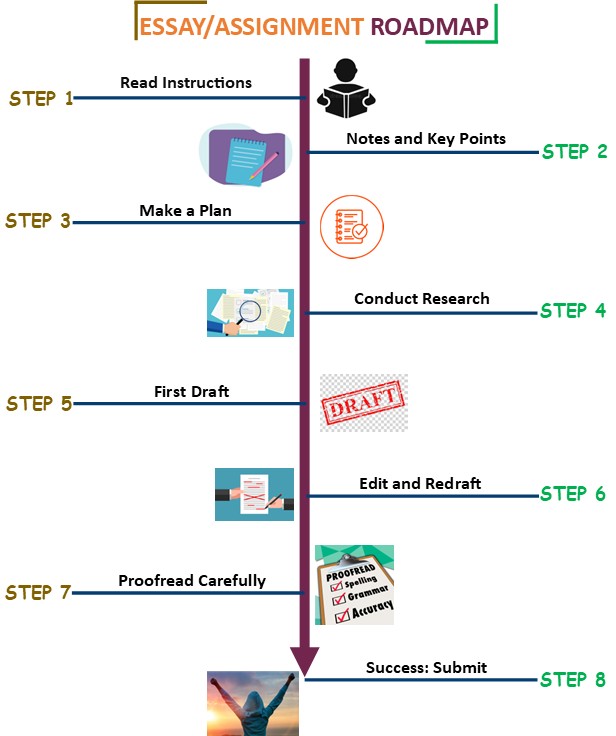
5. Review and Edit Your Work
Before submitting your assignment, check:
· Whether every assessment criterion has been addressed.
· Whether your arguments are logically organised.
· Whether your examples are relevant.
· Whether your recommendations are justified.
· Whether your referencing is accurate.
· Whether your writing is clear and professionally presented.
A well-written assignment should be easy to follow and should demonstrate a clear connection between the assessment question, evidence, analysis and conclusions.
6. How to Use CIPD Assignment Examples Effectively
Assignment examples are valuable learning resources, particularly when you are unfamiliar with a particular unit or assessment format.
However, they should be used responsibly.
When reviewing a sample assignment, pay attention to:
Structure: How has the writer organised the report or response?
Academic language: How are ideas communicated professionally?
Application: How has the writer connected theoretical concepts to organisational situations?
Analysis: How has the writer moved beyond definitions and descriptions?
Referencing: How are academic sources incorporated into the discussion?
Assessment criteria: How does each section address the requirements of the assessment?
You can explore the Pallas Brill Samples Library for examples covering CIPD Level 5 and other professional qualifications.
Remember that examples are intended to support learning and understanding. They should not be copied or submitted as your own work. Your assignment must demonstrate your own understanding, research and application of the relevant concepts.
7. How Pallas Brill Supports CIPD Level 5 Learners
Completing a professional qualification while managing work, family and other responsibilities can be challenging. Some learners struggle with understanding assessment criteria, others find critical analysis difficult, while some need help organising their study schedules and academic writing.
At Pallas Brill Academic Coaching and Online Tutoring, we recognise that every learner has different needs.
Our support is designed to help learners understand their subjects, develop stronger academic skills and become more confident in their studies.
We provide:
One-to-One Academic Coaching
Personalised guidance to help you understand assessment requirements, organise your work and develop independent learning skills.
CIPD Online Tutoring
Subject-specific tutoring to help you understand difficult concepts, theories, professional practices and assessment topics across the Level 5 units.
Assignment Structure and Draft Feedback
Guidance on organising your arguments, addressing assessment criteria, improving academic expression and strengthening your analysis.
Editing and Proofreading
Support with grammar, clarity, coherence, referencing and the professional presentation of your academic work.
Exam and Assessment Preparation
Structured preparation to help you understand key concepts, practise relevant questions and approach assessments with confidence.
Whether you are undertaking 5CO01, 5CO02, 5CO03, 5HR01, 5HR02, 5HR03 or one of the 5OS specialist and optional units, Pallas Brill can help you navigate your learning journey.
8. Frequently Asked Questions About CIPD Level 5 Assignments
1. What is the difference between CIPD Level 3 and Level 5 assignments?
Level 3 generally focuses on developing foundational knowledge and understanding of people practice. Level 5 requires greater critical thinking, application of theory, evaluation of evidence and justified recommendations.
2. Where can I find CIPD Level 5 assignment examples?
You can explore the Pallas Brill Samples Library at https://pallasbrill.com/samples. It provides examples covering different CIPD units and assessment topics to help learners understand assignment structures and expectations.
3. What are the core units in CIPD Level 5 People Management?
The three core units are 5CO01 – Organisational Performance and Culture in Practice, 5CO02 – Evidence-Based Practice and 5CO03 – Professional Behaviours and Valuing People.
4. What are the specialist units in CIPD Level 5 People Management?
The three specialist People Management units are 5HR01 – Employment Relationship Management, 5HR02 – Talent Management and Workforce Planning, and 5HR03 – Reward for Performance and Contribution.
5. What are the CIPD Level 5 optional units?
The optional units include 5OS01 to 5OS07, covering specialist employment law, digital learning and development, learning and development essentials, international people management, equality and inclusion, leadership development and workplace wellbeing.
6. Can I use CIPD assignment examples in my own submission?
Yes, you can use examples as learning resources to understand structure, academic writing, analysis and referencing. However, you must produce your own original work and comply with your learning provider's academic integrity requirements.
7. Does Pallas Brill provide CIPD Level 5 online tutoring?
Yes. Pallas Brill provides academic coaching and online tutoring to help learners understand CIPD concepts, assessment requirements, academic writing and professional development.
Conclusion: Build Your Confidence in CIPD Level 5
Success in CIPD Level 5 requires more than an understanding of HR terminology and theories. It requires the ability to apply knowledge, evaluate evidence, develop arguments and make practical recommendations that reflect the realities of modern people management.
Studying relevant assignment examples, understanding assessment criteria and developing your academic writing skills can make a significant difference to your learning experience.
Most importantly, remember that every assignment is an opportunity to develop the professional knowledge and confidence needed to become an effective people professional.
Ready to strengthen your CIPD Level 5 learning journey?
Explore our CIPD Assignment Samples and Learning Resources or contact Pallas Brill for personalised academic coaching and online tutoring.
Pallas Brill – Academic Coaching and Online Tutoring for Undergraduate, Postgraduate and Professional Learners.
Website: https://pallasbrill.com
WhatsApp: +44 7424 771433
Email: pallasbrill@gmail.com
Frequently Asked Questions
-
Do you work with international students?
-
Why choose Pallas Brill for Academic Coaching and Online Tutoring?
Pallas Brill is committed to providing exeptional services on academic coaching, online tutoring, exam preparation, and editing and proofreading. Our clients benefit from experienced academic specialists, timely delivery, prompt response, affordability, confidentiality, and dedicated customer support throughout your learning process.
-
Can I book a one-off session, or do I need an ongoing plan?
Both options are available. Some learners prefer a single focused session, while others benefit from an ongoing coaching or tutoring plan. You can be certain that our tutoring and coaching professional will work with you in line with your preferred timeline, selected approach, or schedule
-
How far in advance do I need to book?
We recommend booking as early as possible, especially around exam periods or assignment deadlines, to ensure availability. However, you are welcome to engage us even in urgent cases and you can be certain that our services will be exception without ruining quality.